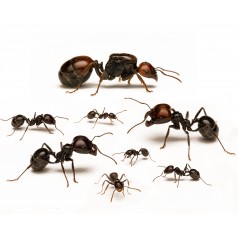
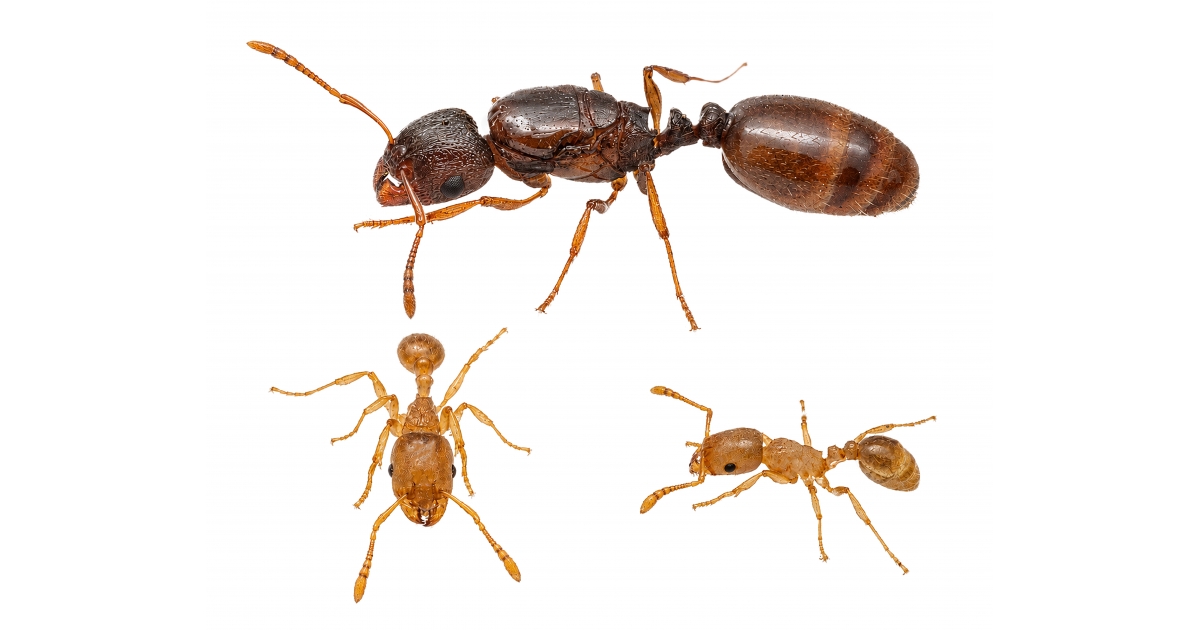
Colony of Tetramorium semilaeve Free Ants Anthouse

Colony of Tetramorium semilaeve

We ship ONLY 1 COLONY or queen and ONLY 1 SPECIES per order or ant's nest, so you must choose correctly the one you want. We do not charge for the ants. They are FREE. You only have to pay for the shipping costs.
€0.00
Tax included

Tetramorium semilaeve is a very common species throughout the peninsula. In the wild it feeds mainly on seeds, sugary substances from aphids and insects...

It is sent ONLY 1 colony or queen and ONLY one species per order horn, so please choose well which one you want. We do not charge for the ants, they are FREE, you only have to pay the shipping costs..

Caution: We ship ONLY 1 COLONY or queen and ONLY 1 SPECIES per order or ant's nest, so you must choose correctly the one you want. We do not charge for the ants. They are FREE. You only have to pay for the shipping costs.

You will receive the ants inside a test tube with food and water for two weeks. They were born inside the test tube and they are well there.


Manual available in the Download tab or by clicking HERE


Difficulty of breeding: MEDIUM


The colony is formed by the queen, 1-5 workers (its children) and eggs, larvae and cocoons.


Instructions about the breeding of Tetramorium semilaeve:


Once you have received the ant colony, the first thing to do is to feed it if possible (water with sugar and derivatives). If there are too many ants, the best thing to do is to put them directly into the nest.

To feed the ants inside the test tube you can use a syringe. Insert the syringe needle through the cotton plug and put a droplet. This droplet must not be large because the ants could drown. Once they have drunk, remove the excess. A cotton bud can be used to clean, but be careful when you remove the plug because the ants can escape.

You can keep the ants in the test tube used for transportation as long as there is water inside. If you keep them inside the tube you must feed them at least twice a week.

To put the ants in the ant nest there are two methods:

- Pour out the contents into the nest, tapping to drop the ants off the tube.

- Place the tube, without the plug, in the ant nest or in the foraging area and wait the ants to relocate by themselves. This may require a lot of patience (days or weeks).

Their diet is based primarily on insects, although they can eat sweet food and seeds (sunflower, for example).


Watch out! They have a special tendency to try to find a way to escape, so you have to close the lids and use any anti-escape, especially Teflon, which is one of the best for this purpose.


Sizes:

  • Queen:   7-9mm
  • Workers: 3-5mm


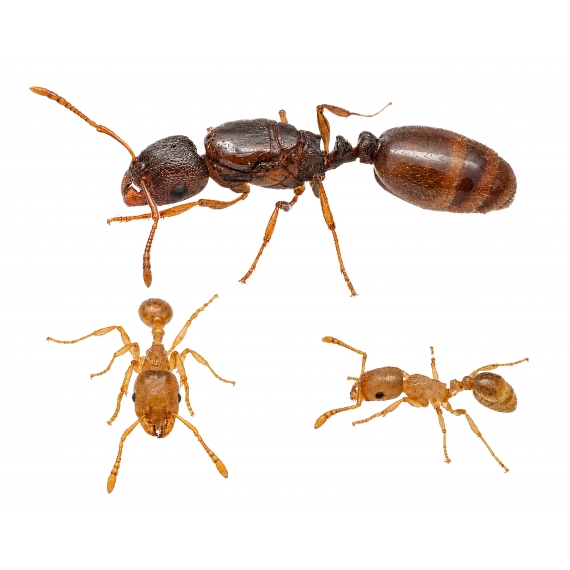
Tetramorium semilaeve

Small, voracious and fast-growing, Tetramorium semilaeve packs a great deal of activity into very little space. Its workers explore, collect seeds and gather around insects: a fascinating species for watching how a colony makes use of food.

Their yellowish and light-brown tones give them a golden appearance, particularly attractive in good lighting. They have no majors or soldier caste: the small workers take care of defence and all other tasks.

They are relatively easy to keep. To begin with, prioritise a small nest, a varied diet and hydration that leaves some areas drier.

QUICK FACTS

  • Difficulty: easy, provided you pay attention to the workers’ small size.

  • Colony founding: claustral and independent.
  • Social structure: both monogyny and polygyny have been reported; preserve the colony’s original composition.
  • Queen: approximately 6–8 mm.
  • Workers: approximately 2–4 mm.
  • Majors: no distinct caste.
  • Adult population: can reach several thousand workers in captivity.
  • Growth: fast under favourable conditions.
  • Recommended temperature: around 22–26 °C during the active period.
  • Humidity: moderate, with one humid area and others kept drier.
  • Diet: omnivorous; insects, sugary liquids and small seeds.

BEHAVIOUR

This ant is native to the western Mediterranean and occurs on the Iberian Peninsula. It prefers warm, dry environments and nests in the ground, often beneath stones. More than one queen has been observed in some nests, but this does not mean that every colony will accept additional queens.

Activity increases with warmth. Established colonies respond strongly to food and can capture small prey through the combined efforts of numerous workers. Watching more workers join in, hold the prey and make use of its remains is particularly interesting.

They also collect seeds and other available resources. This dietary flexibility makes it possible to offer varied foods and observe what the colony accepts at each stage.

The queen can found a colony in a test tube, using her reserves to raise the first workers. During this stage she needs water, darkness and peace; regular feeding begins once the first workers emerge.

It is advisable to keep the colony in the tube until it has more than 8 workers.

Once it reaches this size, it can be moved into a QBIK WILD FOUNDING or a QBIK ALPHA, allowing the ants to relocate by themselves. Additional modules can then be added as the population grows.

Choose small chambers, controllable hydration and securely fitted connections.

For QBIK, fit the escape-proof rings for small species. Expand once the available chambers are well occupied.

FEEDING

Their diet should combine insects, energy-rich liquids and small seeds. Seeds are part of their diet, but it is best to offer a varied selection and monitor consumption.

These options can be used to prepare their menu:

  • Blue Sugar Nectar: an energy source; serve in a feeder suitable for small ants.
  • Anthouse Fruit Honey: an alternative sweet liquid, following the product instructions.
  • Silverfish (Thermobia domestica): feeder insects that can be offered as small specimens or manageable portions.
  • Crickets (Acheta domestica): offer small or chopped specimens, especially during the first generations.
  • Red Runner Cockroach: use small nymphs or pieces, adjusting the quantity to the colony size.
  • Mealworm (Tenebrio molitor): split open or chop to make the inside easier to access.
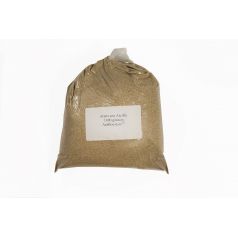
  • Type I Seed Mix: select small grains and break up larger ones to make them easier to eat.

As a starting point, offer a small portion of insect two or three times a week during the active period. Adjust the frequency according to the larvae and consumption: reduce the amount if leftovers remain, or increase it gradually if the ants eat everything quickly.

Keep a small supply of seeds in a dry area. Watching the ants carry them is useful, but check that they actually eat them before adding more.

For the first workers, provide tiny amounts of liquid in a suitable feeder. Avoid puddles and large drops, remove leftovers before they spoil and always keep clean water available.

TEMPERATURE, HUMIDITY AND REST

A practical guideline is to keep the colony at around 22–26 °C during its active season. If you use heating, warm only one section so the ants can move to cooler chambers.

Keep one area moderately humid for the brood and others drier. Originating from dry habitats does not mean the nest should be allowed to dehydrate. Avoid excessive moisture throughout the nest and persistent condensation.

For colonies from mild Mediterranean climates, a useful reference is a cool resting period at around 10–15 °C, with gradual changes. Its duration and intensity should be adapted to the colony’s origin. During this period, continue providing water and adjust feeding to activity levels.

COMMON MISTAKES

  • Moving the colony out of the tube before it has more than 8 workers.
  • Housing a small colony in too many chambers.
  • Allowing the nest to dry out completely or keeping it fully saturated.
  • Offering only seeds and neglecting other foods.
  • Using seeds that are too large without breaking them up.
  • Providing large drops or allowing insect remains to accumulate.
  • Mixing queens or colonies simply because polygyny has been reported.
  • Neglecting connections and closures after maintenance.

IS THIS THE RIGHT SPECIES FOR YOU?

Tetramorium semilaeve is a great choice if you enjoy small workers, constant movement and an enthusiastic response to food. You can watch seed collecting and insect feeding in the same ant farm.

Their size means you need to look closely to appreciate the details; a magnifying glass makes it easier to follow the workers and watch them inside the chambers.

Best features: activity, rapid growth, golden appearance and a varied diet — a great empire in a small space.

Main challenge: adapting space, humidity and food portions to such tiny workers.

Anthouse
237 Items
New product

Customers who bought this product also bought:

Product added to wishlist