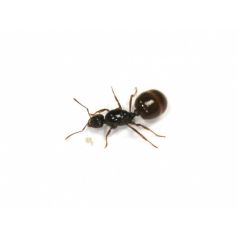
Caution: We ship ONLY 1 COLONY or queen and ONLY 1 SPECIES per order or ant's nest, so you must choose correctly the one you want. We do not charge for the ants. They are FREE. You only have to pay for the shipping costs.
You will receive the ants inside a test tube with food and water for two weeks. They were born inside the test tube and they are well there.
Difficulty of breeding: MEDIUM
The colony is formed by the queen, 5-15 workers (its children) and eggs, larvae and cocoons.
Instructions about the breeding of Pheidole pallidula:
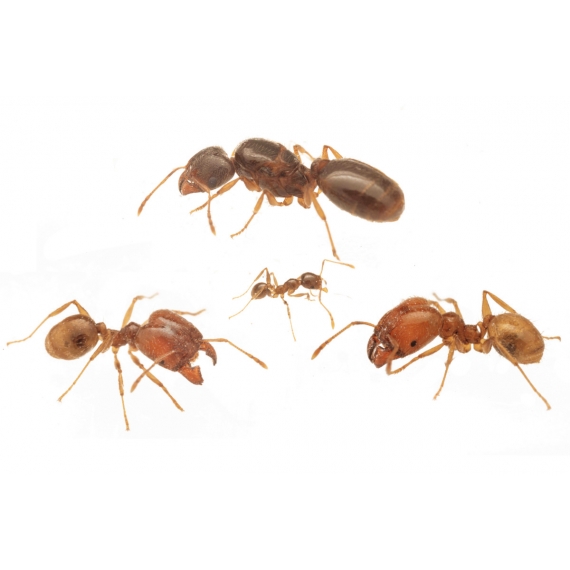
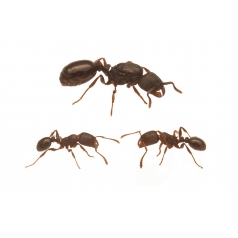
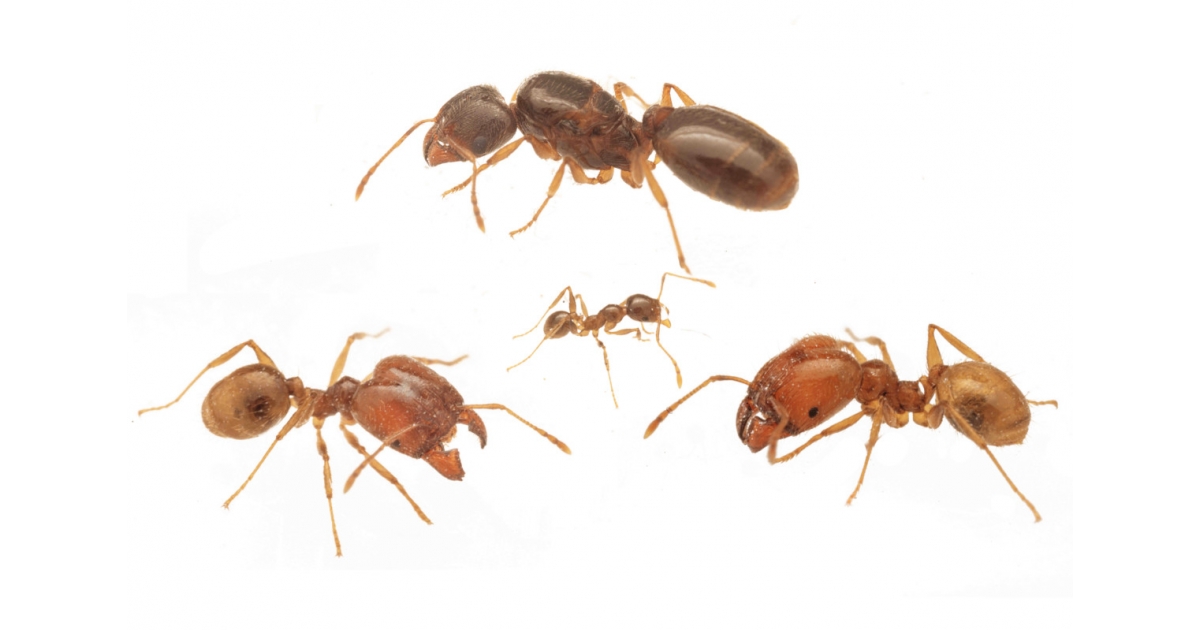
Pheidole pallidula form castes of workers and soldiers (big-headed). Soldiers defend the colony and workers are responsible for its maintenance.
Once you have received the ant colony, the first thing to do is to feed it if possible (water with sugar and derivatives). If there are too many ants, the best thing to do is to put them directly into the nest.
To feed the ants inside the test tube you can use a syringe. Insert the syringe needle through the cotton plug and put a droplet. This droplet must not be large because the ants could drown. Once they have drunk, remove the excess. A cotton bud can be used to clean, but be careful when you remove the plug because the ants can escape.
You can keep the ants in the test tube used for transportation as long as there is water inside. If you keep them inside the tube you must feed them at least twice a week.
To put the ants in the ant nest there are two methods:
- Pour out the contents into the nest, tapping to drop the ants off the tube.
- Place the tube, without the plug, in the ant nest or in the foraging area and wait the ants to relocate by themselves. This may require a lot of patience (days or weeks).
Their diet is based primarily on insects, although they can eat sweet food and seeds (sunflower, for example).
Watch out! They have a special tendency to try to find a way to escape, so you have to close the lids.
Sizes:
Queen: 6-8.5mm
Workers: 1.6-2.6mm
Soldiers: 3.3-4.9mm
IMPORTANT WARNING:
Pheidole pallidula is a species able to live perfectly in the kitchens of our homes, so if you choose these ants you must take extra security measures to prevent escapes.
Pheidole pallidula
Small, active and explosive, Pheidole pallidula is one of the most entertaining Mediterranean ants to keep. Its colonies grow quickly and have two very different castes: tiny minors, which perform most tasks, and majors or soldiers, with enormous heads and powerful mandibles.
Once established, it is hardy and very easy to feed. The most delicate stage is founding: young colonies do not tolerate too much space and should not leave the test tube too early. Their small size also calls for suitable closures and escape barriers.
QUICK FACTS
Difficulty: medium.
Founding: claustral and independent.
Social structure: colonies offered by Anthouse have one queen.
Queen: 6–8.5 mm.
Minors: 1.6–2.6 mm.
Majors: 3.3–4.9 mm.
Adult population: several thousand workers.
Growth: fast or very fast.
Recommended temperature: 24–28 °C.
Humidity: moist brood area and a less humid remainder of the nest.
Feeding: mainly insects; small amounts of energy-rich liquids and only occasional seeds.
BEHAVIOUR
It lives in warm, dry areas, beneath stones, in soil or small crevices. It is very active, territorial and efficient at finding food. A scout can quickly recruit nestmates using chemical trails. Large prey attract hundreds of minors and numerous majors in striking coordinated attacks.
Majors defend the colony, break up food and carry out other tasks. Some store fat as living reserves and may later go out hunting. In mature colonies they usually account for around 10–12% of workers.
With good temperatures and plentiful protein, growth accelerates after the first generations and the colony can reach several thousand individuals.
The colony should remain in its test tube until it has more than 15–20 workers. Moving it earlier or placing it in too large a space is a leading cause of failure.
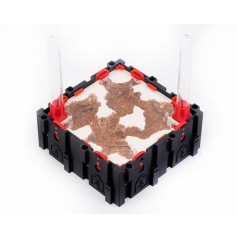
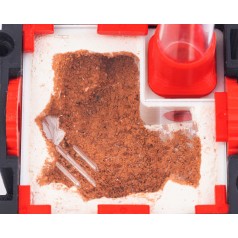
Once it reaches this size, it can be moved to a QBIK WILD FOUNDATION, fully hydrated and with the water dispenser always fitted. It can then be expanded gradually with QBIK WILDmodules, allowing a moist brood area and drier chambers.
The ant nest should have small galleries, stable humidity and suitable closures. For QBIK systems we recommend escape-proof rings for small species and checking the connections.
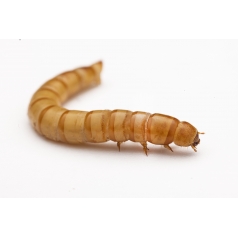
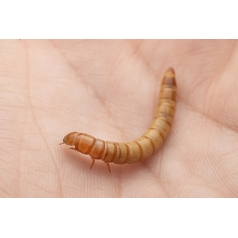
Zophoba (Zophobas morio): occasional supplement for established colonies, always in small pieces.
A small colony can be given a small prey item two or three times a week. Increase the amount as the population and brood grow, according to actual consumption. Remove leftovers before they spoil.
Sugary liquids should be given sparingly in small drops. Too much nectar can make workers sluggish and temporarily slow growth. Although it collects small seeds, it is not a seed-eating species: seeds should only be an occasional supplement, never the staple diet.
Established colonies hunt efficiently thanks to their aggression and mass recruitment. Live insects capable of defending themselves should only be offered to sufficiently large colonies.
TEMPERATURE, HUMIDITY AND WINTER REST
COMMON MISTAKES
IS THIS THE RIGHT SPECIES FOR YOU?
Growth is particularly fast between 25 and 28 °C. Around 20 °C, egg laying and growth slow noticeably; below about 18 °C, brood no longer develops properly.
The nest should maintain a humidity gradient: brood will gather in moist chambers, while other areas should remain less saturated. Drinking water must always be available.
Winter rest depends on origin. Populations from mild climates can remain active when warm, while those from colder regions rest more. Allowing a seasonal slowdown is the most cautious approach, as continuous reproduction could shorten the queen’s lifespan.
Moving the colony out of the tube before it reaches 15–20 workers.
Using an ant nest that is too large.
Keeping the whole nest saturated or allowing drinking water to run out.
Basing the diet on seeds or overfeeding nectar.
Offering large drops in which ants could become trapped.
Leaving insect remains until they spoil.
Neglecting closures, connections or the escape barrier.
Pheidole pallidula is ideal if you want an active, fast-growing colony capable of spectacular recruitment and hunting scenes. Its majors are highly visible and display a wide range of behaviours.
Once the founding stage is over, it is hardy and rewarding, but requires patience in its first weeks, a nest suited to the colony’s size and a plentiful insect diet.
Best features: constant activity, striking majors, coordinated hunting and fast growth. Main challenge: founding; do not move the colony until it exceeds 15–20 workers.
Description:
The Anthouse 3D Starter Kit is a small 3D tank with a sheet of acrylic stuck on one side (sandwich), leaving a gap of 1.5 cm (the ants will live there), and an acrylic lid. You can put the food...
30x20x1.5cm Acrylic nest (MUSHROOM) with central foraging area and water tank included. It keeps higher humidity in the nest and provides improved visibility of the ants. Galleries are 1.5cm high, so it makes...
The colony is formed by the queen, 5-15 workers (its children) and eggs, larvae and cocoons.
Instructions about the breeding of Tetramorium caespitum...
Ideal for mature colonies of several years of life. It consists of three humidity points which provide humidity and water to the entire gallery module.This module is the perfect size for already large colonies. Connecting more than one means that we can have huge colonies in these anthills.Be especially careful with large colonies of Messor sp, as they...
QBIK WILD is the definitive system where the configuration of natural materials converges with the existing modular and adaptive capacity.These anthills allow the best conditions to be obtained from the founding of the colony (with only the queen) until obtaining a developed anthill with thousands of workers.