Colony of Messor barbarus (suitable for beginners) Free Ants Anthouse

Colony of Messor barbarus (suitable for beginners)

We ship ONLY 1 COLONY or queen and ONLY 1 SPECIES per order or ant's nest, so you must choose correctly the one you want. We do not charge for the ants. They are FREE. You only have to pay for the shipping costs.
€0.00
Tax included

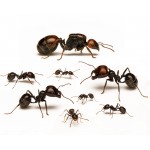
The colony is formed by the queen, 5-15 workers (its children) and eggs, larvae and cocoons.

Instructions about the breeding of Messor barbarus...

MESSOR BARBARUS

The Messor barbarus, or European harvester ant, is a species typical of southern Europe and northern Morocco.

GENERAL CHARACTERISTICS AND MORPHOLOGY

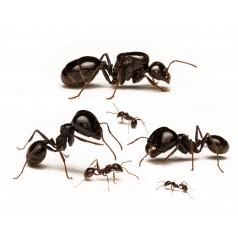
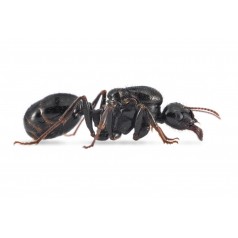
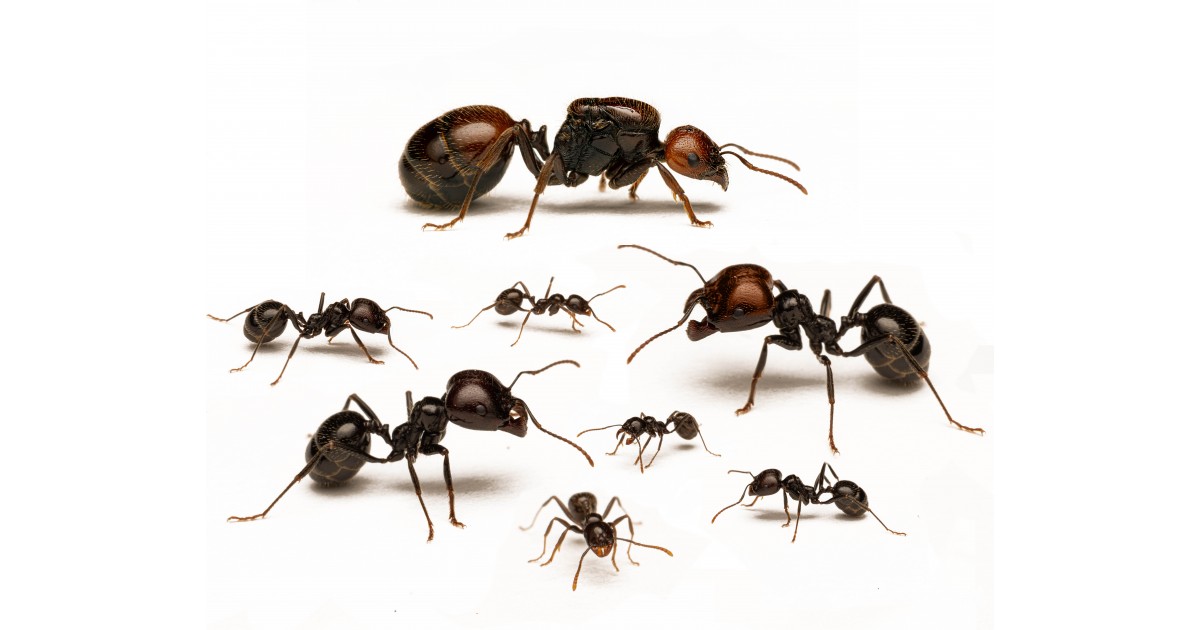
Messor barbarus ants are large, black in color, with reddish heads in both soldiers and the queen. The intensity of the reddish coloration varies between individuals. Their size ranges from 4 mm in the smallest workers to 15 mm in large soldiers.

Soldiers stand out due to the size of their heads, which allows them to develop strong muscles for their mandibles, enabling them to crack a wide variety of seeds. Workers are more slender and smaller, with more proportionate heads and, like soldiers, they can vary in size.

They have small eyes and large flattened mandibles, ideal for transporting seeds. Their mandibles are not sharp and their bite only applies pressure. This species does not sting or cause allergic reactions through contact.

They frequently collect seeds, are almost blind, and are not very aggressive. Their adaptability to artificial nests is among the highest in the ant-keeping world.

This species is ideal for beginners and is highly recommended as a first choice.

BEHAVIOR IN THE WILD

Messor barbarus ants are very hardworking and forage almost all day, avoiding the hottest hours.
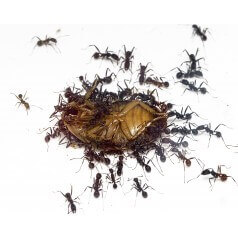
They spend most of their time carrying seeds, so it is common to see seed husks outside their nests. However, they are not strictly herbivorous and will gladly accept animal protein, meaning they may hunt other insects or scavenge.
This is a monogynous species, meaning there is only one queen per colony. Although polygyny can be forced in captivity, it is neither recommended nor necessary.

BEHAVIOR IN CAPTIVITY

This species adapts perfectly to captivity and is considered the easiest species to keep in an artificial nest.
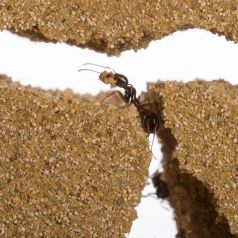
In sand nests, they tend to build large tunnels and quickly create visible branching structures.
In acrylic and 3D nests, they can form very large colonies, as they tolerate almost any type of setup provided proper humidity is maintained.
They are not escape-prone and will rarely attempt to leave the nest. In case of escape, they cannot establish a nest inside a home, so they are not a concern.
Since they do not produce formic acid, stress and vibrations do not cause significant harm.

BREEDING: VERY EASY

Messor barbarus has a great capacity to develop large colonies with moderate maintenance, reaching over 100 individuals in just one year. This is due to very resilient queens with a high reproduction rate.

It is considered ideal for children thanks not only to its easy care but also its very mild bite from soldiers.
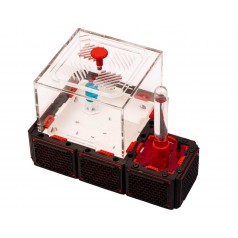
All our ant farms are suitable for this species, giving you a wide range of options.

The only essential requirement is maintaining high humidity, achieved by keeping water sources full and moistening designated hydration areas.

Messor barbarus colonies can become very large, but space limitations will slow their growth. If you want a larger colony, you will need to expand their space. Otherwise, simply maintaining their current area will limit growth.

FIRST STEPS

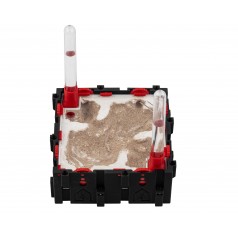
If you have chosen this setup, the first thing to do is prepare the nest. Add the sand, moisten it, and create a small hole with a pipette to facilitate entry for your ants.
To move your ants, the best method is to open the test tube and place it in the foraging area. In T-type nests, the foraging area is located at the top.
Gradually, the ants will relocate, digging deeper and creating internal galleries.

SAND SETUP

The ideal approach for your queen or mini-colony is to allow it to rest in its test tube in darkness for at least 24 hours after transport.
After this period, you can transfer the queen to a Tubex 3D or move a mini-colony with 5+ workers into your chosen nest.
You can choose between two types of nests:

If you have chosen one of these nests, the best way to transfer your ants is by using the “jamonero” connector available in our store. This allows you to connect the test tube to the nest.
Remember to close all openings and moisten the designated areas to make the new nest attractive.
Relocation is a slow process, so be patient.
Once they have moved in, you can enjoy observing colony growth.

FIRST STEPS

Lo ideal para tu reina o minicolonia es respetar los tiempos dejándola descansar del viaje en su tubo de ensayo y en oscuridad mínimo 24h antes de manipularla.
Pasado este tiempo podrás pasar tu reina a nuestro Tubex 3D o la minicolonia con +5 obreras al hormiguero que hayas elegido.
Puedes elegir entre dos tipos de hormigueros:

ACRYLIC / 3D / MODULAR

If you choose this type of nest, the best way to transfer ants is using the “jamonero” connector from our store.
Remember to close entrances and moisten the appropriate areas.
Relocation takes time, so be patient.
Once settled, the colony will begin its growth phase.

SAND

If you have chosen this method, the first thing you should do is prepare the ant farm. To do this, place the sand, moisten it, and make a small hole with the pipette to facilitate the entry of your ants.
To relocate your ants, the best way is to open the test tube and leave it in the foraging area. If it is a T-type test tube, the foraging area is located in the upper section.
Little by little, the Messor barbarus ants will relocate, making the hole deeper and deeper and creating galleries towards the interior.

MAINTENANCE

HUMIDITY

High humidity

Maintaining high humidity is essential, as well as ensuring constant access to water or liquids.
Keep in mind that higher temperatures require closer monitoring of hydration levels.

Always provide water

It is vital to always provide water and humidity to prevent dehydration, as this species does not have a highly developed social stomach.

Water feeder clogging

It is recommended to clean water feeders frequently, as ants may instinctively clog them after drinking.

Extra humidity

During hot periods, place a small water-filled test tube with cotton in the foraging area. This will act as an additional water source and humidity backup.

WASTE MANAGEMENT

They usually accumulate waste in the foraging area, although it may also appear in galleries if the nest is too large.
As the colony grows, they will relocate waste back to the foraging area.
It is important that waste does not get wet to prevent mold and mites.

TEMPERATURE

Messor barbarus hibernates in nature, so lower temperatures in winter help slow their cycle.
Although hibernation is not strictly necessary, skipping it may shorten the queen’s lifespan.
They are a hardy species that can tolerate 5°C to 35°C, but their optimal temperature is around 25°C.

FEEDING

CANARY SEEDS 100%
LETTUCE SEEDS90%
CHIA / QUINOA SEEDS 75%
GRASS SEEDS 70%
GAMMARUS80%
DRIED INSECTS70%
MEALWORMS85%
CRICKETS75%
COCKROACHES80%
FLIES 90%
FRUIT (AVOID CITRUS) 50%
FISH FOOD70%

*To accelerate colony growth, occasionally provide insects or gammarus.
*Never use toxic or contaminated insects.
*Live large insects only for colonies with more than 100 workers.
*Wild insects should be frozen beforehand to eliminate parasites.

COMMON MISTAKES AND PROBLEMS

Avoid direct sunlight exposure, as greenhouse effects can kill ants within minutes.

They do not tolerate the viscosity of honey well and may get stuck.

To prevent seed germination, provide small quantities or crush them.

When feeding fruit, use a feeder to avoid contact with soil.

Avoid overfeeding, as excess waste can harm the colony.

Lack of water can quickly lead to colony death.

FAQ's

My colony is very young and some workers have died. Is this normal?

The first workers (“nurses”) develop quickly and have shorter lifespans. Only worry if deaths are frequent and numerous.

My ants are not moving into the nest. What should I do?

Each colony behaves differently. Be patient—some take weeks to relocate.

Why are my ants so inactive?

This species hibernates in cold conditions, slowing its activity. Activity will resume in spring.

My ants are not eating. Is something wrong?

Overfeeding is common. Provide small amounts and avoid excess.

How long until I get soldiers?

It depends on the colony. Some appear in the first year, growing larger over time.

I have many ants. Do I need a bigger nest?

If many ants gather in the foraging area, it’s time to expand or upgrade the nest.

Do they need water and nectar like Blue Sugar?

Yes, but always provide an additional water source.

My queen is outside the nest. Is that normal?

No. It may indicate dehydration or illness.

My queen died. What happened?

Some queens naturally fail. If workers are still alive, it is usually not your fault.

Anthouse
5179 Items
New product
10 ml Mineral Oil (Anti-escape) Other accessories Anthouse 10 ml Mineral Oil (Anti-escape) Other accessories Anthouse 2
Available
Other accessories

10 ml Mineral Oil (Anti-escape)

Anthouse
€2.99
Aceite Mineral
Very effective anti-escape with large ants, Messor, Camponotus, Aphaenogaster...
Canary Seed (50gr) Food Anthouse
Available
Food

Canary Seed (50gr)

Anthouse
€0.49
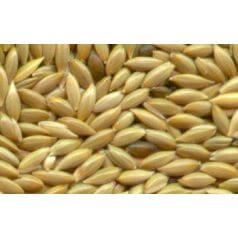
Necessary food for granivorous ants (Messor, Goninomm, Tetramorium...)
Grass Seed (15gr) Food Anthouse
Available
Food

Grass Seed (15gr)

Anthouse
€0.99
Necessary food for granivorous ants (Messor, Goninomm, Tetramorium...)

Customers who bought this product also bought:

Product added to wishlist