We ship ONLY 1 COLONY or queen and ONLY 1 SPECIES per order or ant's nest, so you must choose correctly the one you want. We do not charge for the ants. They are FREE. You only have to pay for the shipping costs.
€0.00
Tax included
The colony is formed by the queen, 5-15 workers (its children) and eggs and larvae.
Instructions about the breeding of Lasius grandis...
And if you want a more specialised book, we recommend Lasius (3,99€)(click here), concerning the breeding and care of Lasius.
Both books are available ONLY IN SPANISH.
Caution: We ship ONLY 1 COLONY or queen and ONLY 1 SPECIES per order or ant's nest, so you must choose correctly the one you want. We do not charge for the ants. They are FREE. You only have to pay for the shipping costs.
You will receive the ants inside a test tube with food and water for two weeks. They were born inside the test tube and they are well there.
Difficulty of breeding: EASY
The colony is formed by the queen, 5-15 workers (its children) and eggs and larvae.
Instructions about the breeding of Lasius grandis (big black ant):
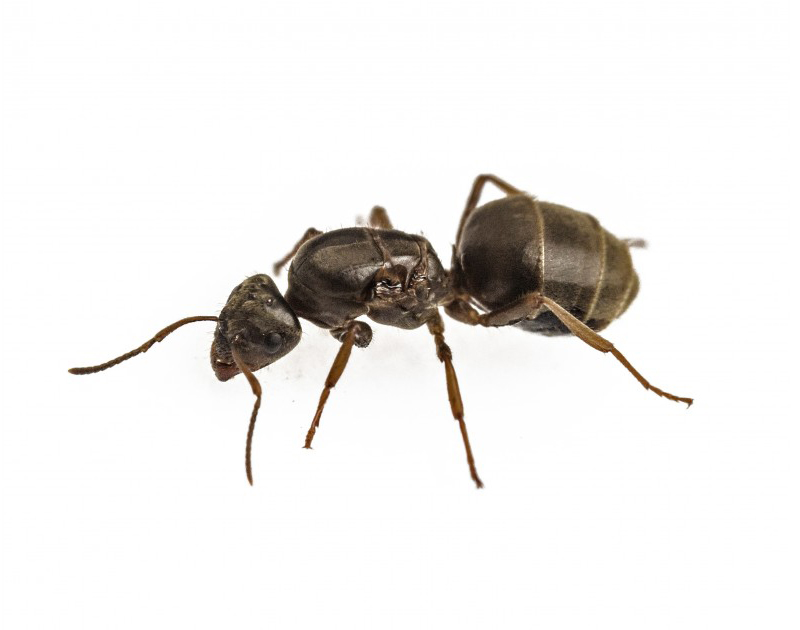
Lasius grandis is a very common species throughout Spain. The queen can live up to 20 years in captivity. (Suitable for begginers)
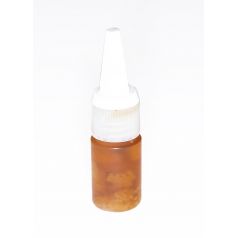
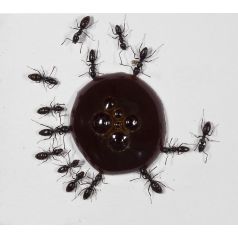
In nature they mainly live milking aphids. They also eat dead insects (they are scavengers). Therefore, they need to be fed with nutritious substitutes of the molasses from the aphid such as nutritious syrup (anthouse.es) and some dead insects.
Once you have received the ant colony, the first thing to do is to feed it if possible (water with sugar and derivatives). If there are too many ants, the best thing to do is to put them directly into the ant nest.
To feed the ants inside the test tube you can use a syringe. Insert the syringe needle through the cotton plug and put a droplet. This droplet must not be large because the ants could drown. Once they have drunk, remove the excess. A cotton bud can be used to clean, but be careful when you remove the plug because the ants can escape.
You can keep the ants in the test tube used for transportation as long as there is water inside. If you keep them inside the tube you must feed them at least twice a week.
To put the ants in the ant nest there are two methods:
- Pour out the contents into the nest, tapping to drop the ants off the tube.
- Place the tube, without the plug, in the ant nest or in the foraging area and wait the ants to relocate by themselves. This may require a lot of patience (days or weeks).
General details:
The most appropriate feeding is a diet based on liquid substances, such as nutritious syrup (anthouse.es), honey with milk and some newly dead insect (flies, crickets, silverfish, mealworms, etc). This diet has a high protein content.
It is VERY IMPORTANT that there is always WATER available, especially in summer. You can use water troughs, water gel (anthouse.es), the ants can drink directly from the humidity system (sand), from liquid food they take, etc.
Sizes:
Queen: 11-10 mm
Workers: 4-7 mm
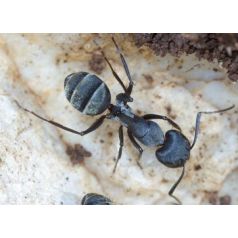
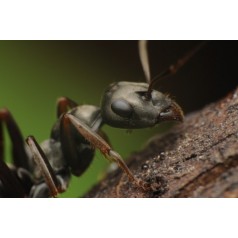
Lasius grandis
Hardy, voracious and exceptionally dominant, Lasius grandis is a native ant species with rapid growth and very large colonies. It stands out for its enormous appetite, recruitment behaviour and the intensity with which it defends its nest and food.
Although it has no major workers, its appearance changes as the colony grows: the first workers are small, while those born in later generations are usually larger and more robust.
It is easy to keep and thrives in captivity. It needs high humidity, a dry area for cocoons, plenty of sugary liquids and frequent protein.
QUICK FACTS
Difficulty: easy; suitable for beginners.
Colony founding: claustral and independent.
Social structure: monogynous; one queen per colony.
Queen: approximately 8–10 mm.
Workers: around 3–5 mm; the first generations are smaller.
Majors: no distinct major caste.
Mature colony: several thousand workers.
Growth: rapid, especially once established.
Recommended temperature: 22–28 °C during the active period.
Humidity: high, with a dry area for cocoons.
Diet: sugary liquids and animal protein; not seed-eating.
BEHAVIOUR
It inhabits the Iberian Peninsula and other parts of the western Mediterranean, in gardens, farmland and somewhat humid natural habitats. It nests beneath stones, slabs or roots, often near trees with aphids from which it obtains honeydew.
A scout can quickly recruit nestmates and establish heavily used trails to food. It is extremely dominant and aggressive when threatened: if other ants try to take its resources, workers may surround, restrain and attack them in a coordinated way. It has no sting but combines bites with formic acid, which is particularly harmful to other ants.
It is also a scavenger and opportunistic hunter. It collects dead insects, and established colonies may capture small live or injured prey.
The first workers develop using the queen’s reserves. Once they begin foraging, they bring more food to the larvae, allowing larger and more numerous generations to develop.
The queen should remain in a test tube during founding, with darkness, quiet and a steady water supply. She does not need feeding to raise her first workers.
With around 10–30 workers, if feeding inside the tube becomes inconvenient, it can be connected to a small foraging area. There is no need to force the colony to leave the tube.
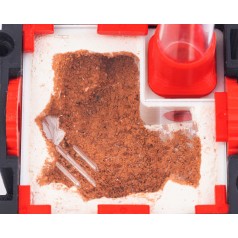
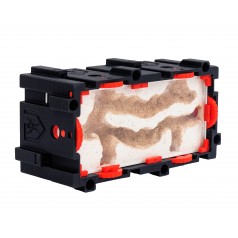
For relocation, we recommend a QBIK WILD FOUNDATION, sized to the colony. It can later be expanded with QBIK WILD ONE and QBIK WILD DUO modules, maintaining areas with different humidity levels.
The TERRA system is also suitable for established colonies, although in our experience this species develops better in natural materials.
Choose small chambers and expand once they are well occupied. Plan for additional chambers and a convenient foraging area for feeding and cleaning.
It needs plenty of sugary liquids and frequent animal protein. Sugars provide energy for workers; insects feed the larvae and support growth.
In the wild, it exploits honeydew from aphids and other hemipterans. In captivity, nectar and other energy-rich liquids are essential. Seeds are not part of its diet.
Blue Sugar Nectar: very readily accepted; an energy source especially suitable for active colonies.
Anthouse Fruit Honey: very suitable for Camponotus; offer in controlled drops or feeders.
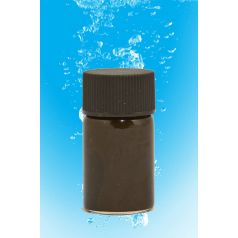
Protein syrup: a supplement for queens and young colonies, also useful after transport.
Silverfish (Thermobia domestica): excellent acceptance; soft and easy to use even for the first workers.
Crickets (Acheta domestica): nutritious and very readily accepted; offer small or chopped portions to young colonies.
Red Runner cockroach: an excellent protein source; adapt the size of nymphs or portions to the colony population.
Mealworms (Tenebrio molitor) and superworms (Zophobas morio): accepted more readily than by other Camponotus, although usually among their least preferred prey. Offer chopped as an occasional supplement.
Young colonies can receive energy-rich liquids several times a week and small portions of insects. Increase quantities according to larval numbers and actual consumption, which can be enormous in large colonies.
Avoid offering too many tiny prey items at once. Workers may carry them whole into the nest, causing waste to build up that is difficult to remove. For large colonies, use larger prey or portions that can be processed in the foraging area, always adjusting the amount.
Remove leftovers before they spoil and keep clean water available at all times. Use suitable drinkers or tiny droplets to prevent workers from becoming trapped in liquids.
TEMPERATURE, HUMIDITY AND WINTER REST
During the active period it can be kept between 22 and 28 °C. A warm area around 25–27 °C encourages egg laying and development; there is no need to heat the entire ant farm.
Humidity should be high in the egg and larval chambers, while maintaining a dry area for cocoons. Avoid both drying out the nest and saturating every chamber. This gradient lets the colony distribute its brood according to its needs.
Drinking water must always be available, even if the ant farm has an active humidity system.
During winter, switch off heating and allow a rest period of two or three months in a cool area. Keep water available and adapt feeding to activity, offering food if workers continue to forage.
COMMON MISTAKES
Assuming the first nanitic workers represent the size of workers in a mature colony.
Allowing the nest to dry out or saturating it without keeping a dry area for cocoons.
Providing nectar but too little protein for the number of larvae.
Offering seeds as food.
Offering too many small prey items and allowing waste to accumulate inside the nest.
Leaving insect remains until they spoil.
Failing to plan the expansions a growing colony will need.
IS THIS THE RIGHT SPECIES FOR YOU?
Lasius grandis is ideal if you want a hardy, fast-growing and highly active native species. Its feeding trails and recruitment behaviour let you observe how thousands of workers exploit and defend resources.
Later generations produce larger workers, and the response to food becomes especially intense as the colony grows.
Main advantages: rapid growth, very large colonies, enormous appetite and coordinated recruitment.
Main challenge: maintaining high humidity with a dry area for cocoons and controlling the waste carried into the nest.
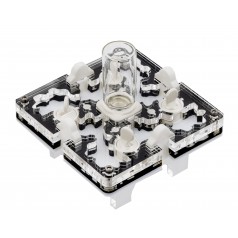
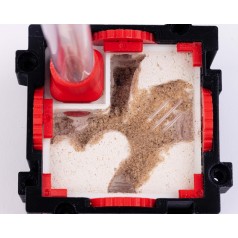
Our 10x10 Deposit Module is adapted to be connected with other 4 modules, being able to carry out the composition combinations according to the needs of each species. It can be combined with other modular models with a different humidity system or with more foraging areas. With a new design of galleries, with 3D sliding covers, optimizing the available...
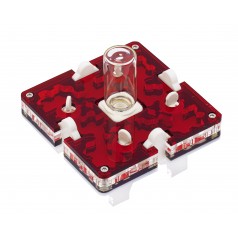
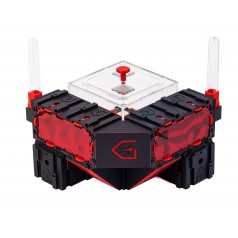
QBIK WILD is the definitive system where the configuration of natural materials converges with the existing modular and adaptive capacity.These anthills allow the best conditions to be obtained from the founding of the colony (with only the queen) until obtaining a developed anthill with thousands of workers.
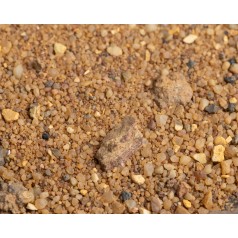
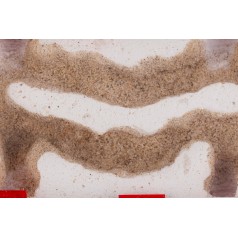
A mixed substrate ideal for species that need a solid base to move quickly, although it can be used wet, the ideal is to leave it dry for native species, an ideal substrate to help the larvae spin.
Queen arrives in a test tube with its first eggs. Once you have it at home, it is important to add a micro drop of water with sugar or honey, very diluted to prevent drowning...
QBIK WILD is the definitive system where the configuration of natural materials converges with the existing modular and adaptive capacity.These anthills allow the best conditions to be obtained from the founding of the colony (with only the queen) until obtaining a developed anthill with thousands of workers.
Queen arrives in a test tube with its first eggs. Once you have it at home, it is important to add a micro drop of water with sugar or honey, very diluted to prevent drowning...