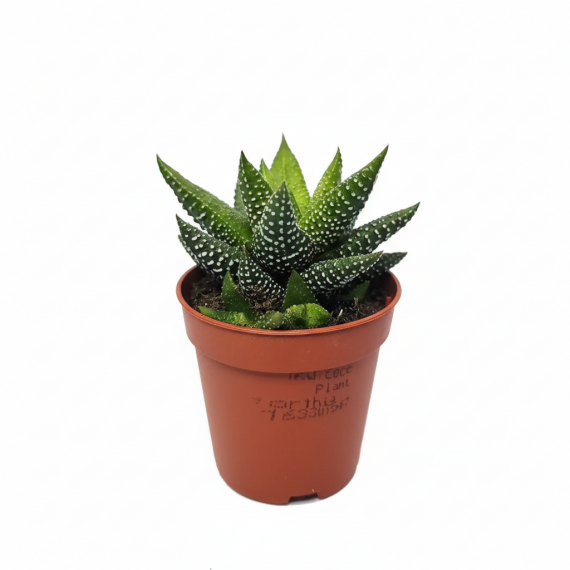
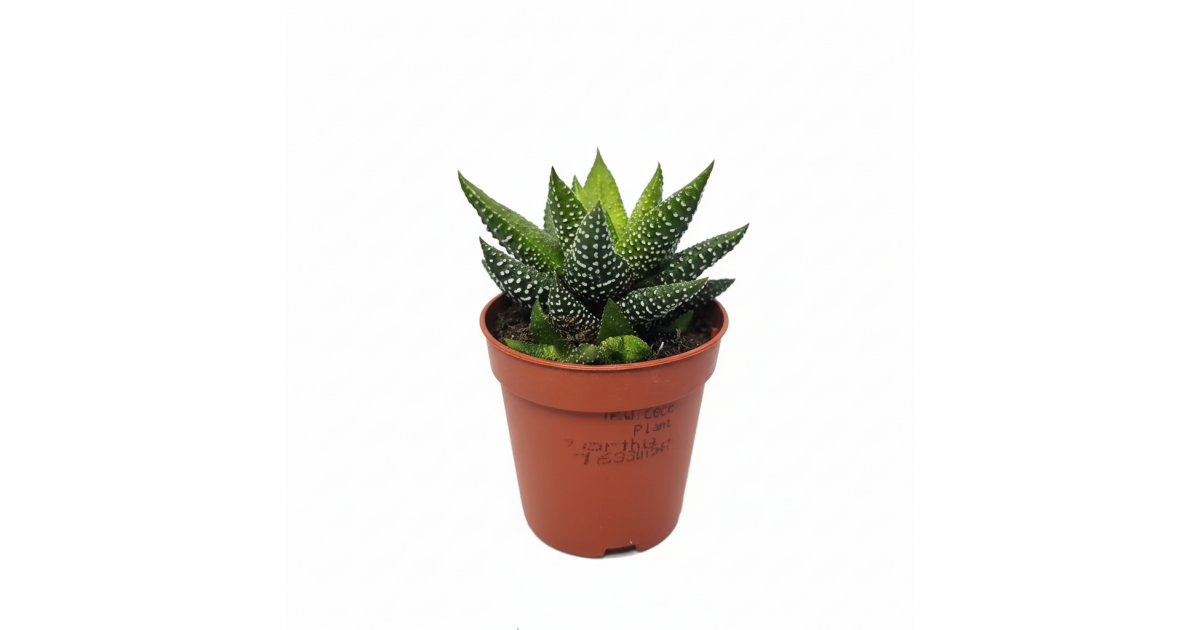
Haworthiopsis attenuata
Exhausted
€2.99
Tax included
Haworthiopsis attenuata, formerly known as Haworthia reinwardtii, is a succulent plant belonging to the Asphodelaceae family. This species is native to South Africa and has become popular in gardening due to its attractive appearance and ease of care.
Customers who bought this product also bought:
Containers
€1.99
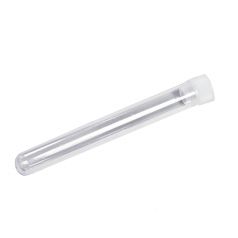
10 test tubes with stopper for transportation and care of the ants. Unit price: 0.15€. Made of plastic. Dimensions: 10cm long x 1.6cm diameter.
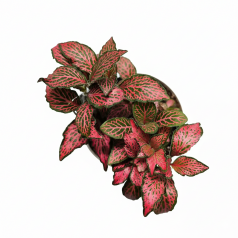
It's a small, ornamental, and inexpensive plant. It thrives in dimly lit corners and is ideal for terrariums.Beautiful leaves in a variety of colors will add a touch of distinction to your ecosystem.
Home
€4.49
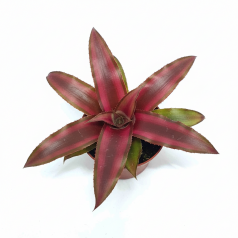
Cryptanthus are part of the bromeliad family and are native to Brazil.Cryptanthus grows from a flattened rosette. The leaves are wavy and have a striped pattern.
Food
€0.79
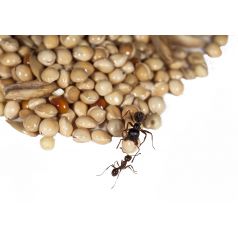
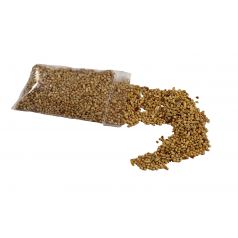
Necessary food for granivorous ants (Messor, Goninomm, Tetramorium...)
Food
€0.79
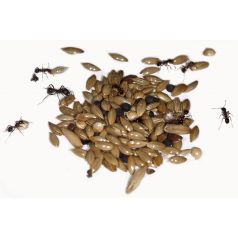
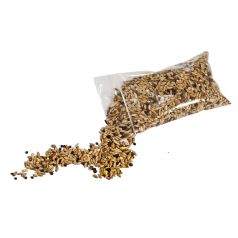
Necessary food for granivorous ants (Messor, Goninomm, Tetramorium...)
Free Ants
€0.00
The queen usually takes three months on average to put their first egg. The new ants are born in early September-October and late December we find the first queens with some eggs....
€1.49
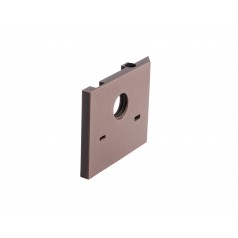
Left Corner Side Connector of the Gaia, necessary to join the Gaia system with the Qbiks modules.
Home
€36.49
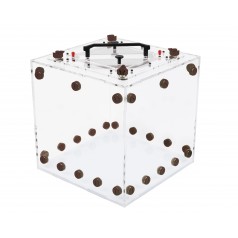
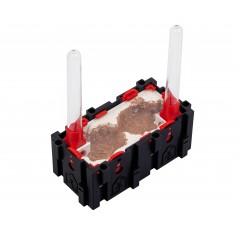
QBIK WILD is the definitive system where the configuration of natural materials converges with the existing modular and adaptive capacity.These anthills allow the best conditions to be obtained from the founding of the colony (with only the queen) until obtaining a developed anthill with thousands of workers.
€6.99
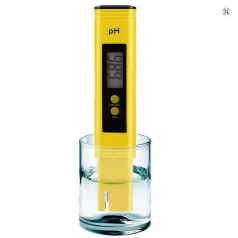
In ant farming, a pH meter is primarily used to test the water provided to the colony or used to moisten the nest (especially in plaster nests or substrates).It is vital to ensure that the water is within a neutral pH range (close to 7.0). Water that is too acidic or alkaline can be harmful to the ants, their larvae, and their eggs, and can negatively...